 Save
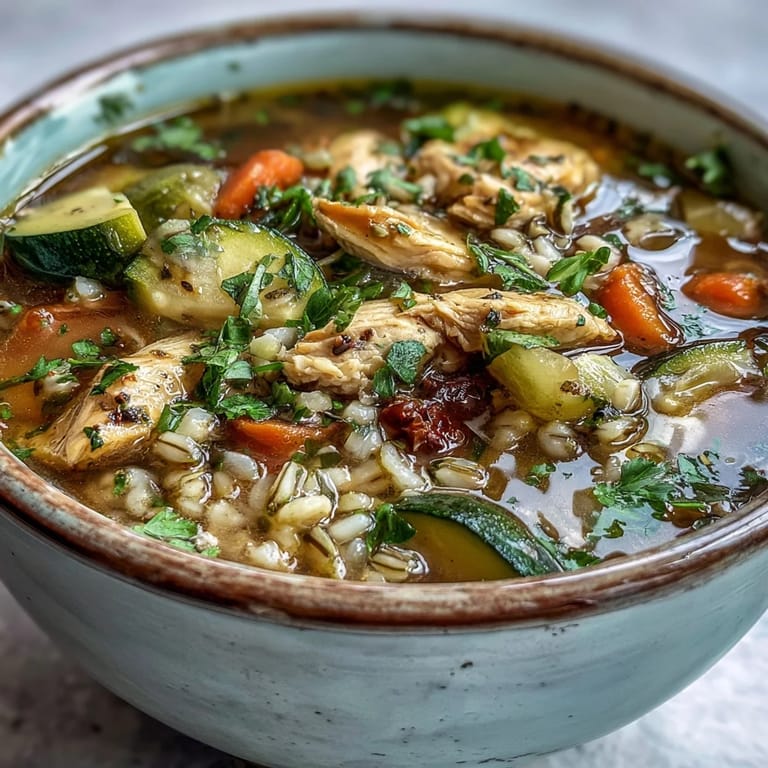
Save There's something about the golden warmth of turmeric that makes a kitchen feel like a healing space, and I discovered this soup quite by accident one November afternoon when I was rummaging through my spice rack looking for something, anything, to transform a plain chicken broth into something memorable. The turmeric caught my eye, and I remembered reading about its anti-inflammatory magic, so I started building around it. What emerged was this silky, comforting bowl that somehow tastes both modern and timeless, with pearl barley adding a gentle chew that keeps you coming back for spoonful after spoonful.
I made this for my neighbor last winter when she mentioned feeling run down, and I watched her face change as she tasted it—not the theatrical gasp, but something quieter, like she'd found exactly what she needed without knowing she was looking for it. She asked for the recipe that same evening, and now whenever I see her kitchen light on late, I wonder if she's making it too.
Ingredients
- Chicken breasts: Boneless and skinless cook faster and won't cloud the broth like bone-in pieces might, keeping that golden clarity intact.
- Pearl barley: Rinse it under cold water first to remove excess starch—this keeps your soup from becoming gluey and murky.
- Carrots and celery: These are your flavor foundation; don't rush the initial sauté or you'll miss the caramelization that deepens everything else.
- Onion and garlic: Yellow onion is milder than white, which matters when you want turmeric to be the star, not a supporting player competing for attention.
- Zucchini: Added late so it stays tender and bright, not disintegrated into the background.
- Chicken broth: Low-sodium is crucial here because you're controlling the salt and the turmeric can taste metallic if the broth is oversalted.
- Turmeric: Ground turmeric rather than fresh root gives you that warm, slightly bitter undertone that feels medicinal in the best way.
- Cumin and thyme: Cumin echoes turmeric's earthiness while thyme adds a whisper of herbaceousness without dominating.
- Fresh parsley: A handful stirred in at the end brightens everything and cuts through the richness.
Tired of Takeout? 🥡
Get 10 meals you can make faster than delivery arrives. Seriously.
One email. No spam. Unsubscribe anytime.
Instructions
- Build your flavor base:
- Heat olive oil and let the onion, carrots, and celery soften for about five minutes, listening for that gentle sizzle and watching the onion turn translucent at the edges. You want them tender enough to release their sweetness but still holding their shape.
- Bloom the spices:
- This is the moment that changes everything—add the garlic, turmeric, cumin, and thyme to the softened vegetables and let them toast for just one minute until your kitchen fills with that warm, earthy aroma. Don't skip this step or your soup will taste flat and one-dimensional.
- Introduce the chicken:
- Stir in the diced chicken and let it sear for a couple minutes until the edges turn opaque and the spices coat every piece. This sealing won't make it crispy, but it will help the chicken hold together during the long simmer.
- Combine everything:
- Pour in your broth, add the rinsed barley, salt, and pepper, giving everything a good stir so nothing settles to the bottom. The barley will expand as it cooks, so don't be alarmed by how sparse it looks now.
- Start the long simmer:
- Bring the pot to a gentle boil, then lower the heat so you see just the occasional bubble breaking the surface, cover it, and let time do the work. Stir every fifteen minutes or so, partly to prevent sticking but mostly because the aroma keeps pulling you back to the kitchen.
- Finish with tenderness:
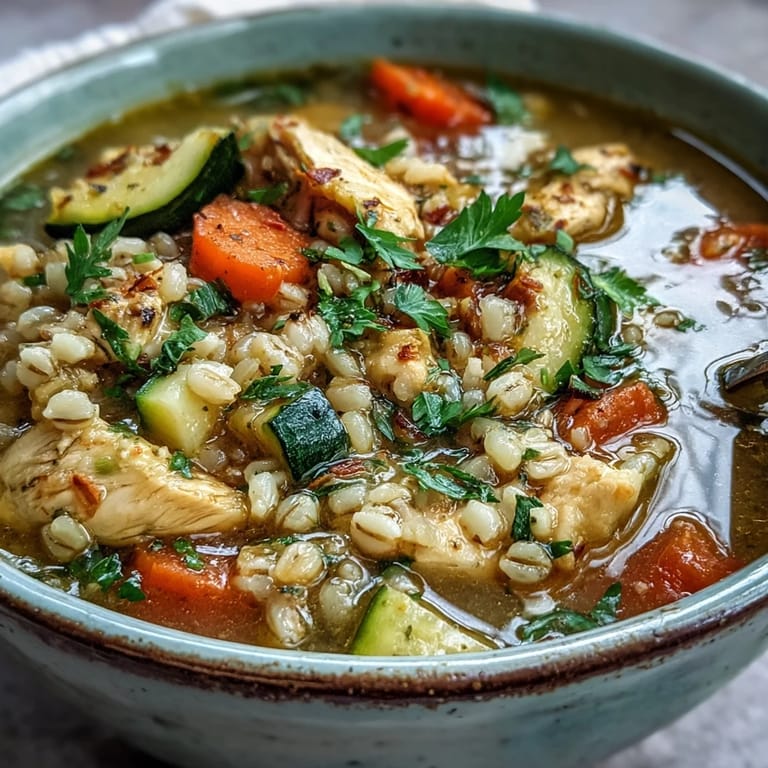
- About thirty-five minutes in, add your diced zucchini and give it another ten to fifteen minutes so it softens without falling apart. The barley should be creamy and tender, the chicken cooked through, and the broth transformed into something that tastes like it took hours when it really didn't.
- Taste and adjust:
- Before serving, taste it straight from the ladle and adjust the salt or add a pinch more turmeric if it needs it. Ladle into bowls, scatter parsley on top, and serve with lemon wedges so people can add brightness as they wish.
 Save
Save This soup somehow became part of my self-care routine, the thing I make for myself on mornings when everything feels too much, when I need to slow down and remember that healing doesn't have to look complicated. There's something almost meditative about ladling it into a bowl and watching the steam rise up.
Making It Your Own
The beauty of this soup is that it welcomes improvisation without losing its soul. I've added fresh spinach at the very end, stirred in a handful of chickpeas when I didn't have enough chicken, and even experimented with a splash of fresh lemon juice right into the pot for brightness. The turmeric is generous enough to carry the dish even when you make these small changes, and the barley stays grounding and gentle no matter what additions you choose.
The Science of Turmeric
Turmeric has this reputation for being a wellness ingredient, and while I'm not a nutritionist, I do know that it's been used in cooking and traditional medicine for thousands of years for good reason. The warmth you feel in your mouth and throat isn't just flavor—it's actually the compound curcumin doing something real in your body, which is why this soup never feels indulgent even though it's deeply satisfying.
Serving and Storage
Serve this soup hot with thick slices of crusty bread for soaking up the broth, and a wedge of lemon on the side so everyone can brighten their bowl as they like. The soup keeps beautifully in the refrigerator for up to four days, and the flavors actually deepen overnight as the barley continues to absorb the golden broth and the spices meld into something even more cohesive.
- Reheat gently on the stove with a splash of water or broth if it's gotten too thick—microwaving works too but takes away some of that cozy ritual.
- Freeze leftovers in individual portions for up to three months, and you'll have instant comfort whenever you need it.
- If you're meal-prepping, let it cool completely before storing to avoid condensation that can make the barley mushy.
 Save
Save This soup has become one of those recipes I make without thinking, the kind you can build with your eyes closed because your hands remember the steps. It's proof that the simplest recipes often carry the most warmth.
Recipe FAQ
- → Can I use chicken thighs instead of breasts?
Yes, boneless skinless chicken thighs work beautifully and add extra richness. Use the same weight and cooking time, as thighs stay tender and moist during simmering.
- → How do I store and reheat leftovers?
Store in an airtight container in the refrigerator for up to 4 days. The barley will absorb liquid over time, so add extra broth when reheating. Warm gently on the stovetop or microwave until heated through.
- → Can I make this in a slow cooker?
Absolutely. Sauté the vegetables and spices first, then transfer everything except zucchini to your slow cooker. Cook on low for 6-7 hours or high for 3-4 hours. Add zucchini in the last 30 minutes.
- → What can I substitute for pearl barley?
Try farro, brown rice, or quinoa as alternatives. Adjust cooking time accordingly—farro needs about the same time, while quinoa cooks faster (about 20 minutes) and brown rice may need longer.
- → Is fresh turmeric better than ground?
Fresh turmeric offers a brighter, more vibrant flavor. Use about 1 tablespoon of grated fresh turmeric root in place of the ground version. Peel and grate it finely before adding with the other spices.
- → Can I freeze this soup?
Yes, this soup freezes well for up to 3 months. Cool completely before transferring to freezer-safe containers. Note that the barley texture may soften slightly after thawing. Reheat gently on the stovetop.