 Save
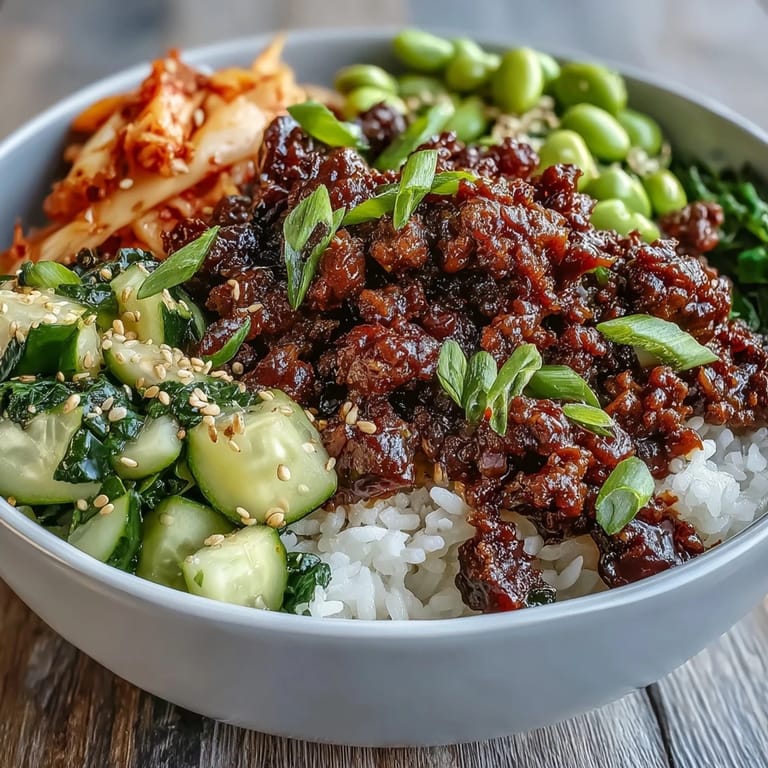
Save My friend Marcus texted me a photo of his lunch one Tuesday—a vibrant Korean rice bowl he'd grabbed near his office—and I couldn't stop thinking about it. The next evening, I raided my pantry for gochujang and sesame oil, determined to recreate that exact moment of satisfaction at home. What started as a quick weeknight dinner became something I now make whenever I need to feel like I've traveled somewhere delicious without leaving my kitchen. The beauty of this bowl is that it comes together faster than takeout, but tastes like someone who actually knows what they're doing prepared it.
I made this for a potluck once, nervous that bringing a rice bowl would seem too casual, but it disappeared within minutes while fancier dishes sat untouched. One coworker actually asked if I'd made it myself or ordered from somewhere, which felt like the highest compliment possible. That's when I realized this dish has a quiet confidence to it—it doesn't need to apologize for being simple because it's genuinely delicious.
Ingredients
- Lean ground beef (1 lb): The foundation of everything, and using lean means less grease pooling in your pan while the meat still stays tender and flavorful when cooked properly.
- Gochujang (2 tbsp): This fermented Korean chili paste is where the magic lives—it's spicy, salty, and deeply savory all at once, and don't skip it or substitute with regular hot sauce.
- Soy sauce (2 tbsp): Adds saltiness and depth that gochujang alone can't quite achieve, creating a more rounded, complex flavor.
- Brown sugar (1 tbsp): A little sweetness balances the heat and salt, preventing the sauce from tasting one-dimensional.
- Garlic and ginger (2 cloves and 1 tbsp): Mince these finely and bloom them in the oil first—this step transforms them from sharp and raw into mellow and aromatic.
- Toasted sesame oil (1 tbsp): Use the toasted kind, never the untoasted version, because the difference in flavor is everything.
- Green onions (2 total): Split them—half goes into the beef for warmth, half scatters on top for fresh, crisp bite.
- Short-grain rice (4 cups cooked): The sticky texture catches all that savory sauce and holds the bowl together.
- Edamame (1 cup): Adds protein and a slightly sweet, buttery contrast to the spicy beef.
- Cucumber and carrot (1 cup each): Fresh, cool, and crunchy—they're the palate cleanser that makes you want another bite.
- Kimchi (1 cup): Bring funk and fermented complexity that ties everything back to Korea, plus that signature tangy heat.
- Toasted sesame seeds (2 tbsp): Toast them yourself if you can; they smell incredible and taste nuttier than store-bought.
Tired of Takeout? 🥡
Get 10 meals you can make faster than delivery arrives. Seriously.
One email. No spam. Unsubscribe anytime.
Instructions
- Bloom your aromatics:
- Pour sesame oil into a large skillet over medium heat and let it get shimmering before adding minced garlic and ginger. You'll know you're doing this right when your kitchen smells like a Korean restaurant and you get that immediate sense that something good is happening.
- Brown the beef:
- Add ground beef and break it up with a spatula as it cooks—don't just stir it around, actually use the back of the spatula to crumble it into small, even pieces. This usually takes 5 to 6 minutes until there's no pink left and the meat has developed slightly crispy edges.
- Build the sauce:
- Stir in gochujang, soy sauce, and brown sugar, then let it simmer for another 2 to 3 minutes. You'll see the sauce thicken and coat each piece of beef, which is exactly what you want—it shouldn't be watery.
- Finish with green onions:
- Remove from heat and stir in half the sliced green onions so they soften slightly from the residual heat. This keeps them from feeling completely raw while still maintaining their crispness.
- Assemble with intention:
- Divide rice among four bowls, then arrange the beef and all the fresh toppings on top in clusters so each spoonful gets beef, vegetables, and rice together. Scatter remaining green onions and toasted sesame seeds over everything just before serving.
 Save
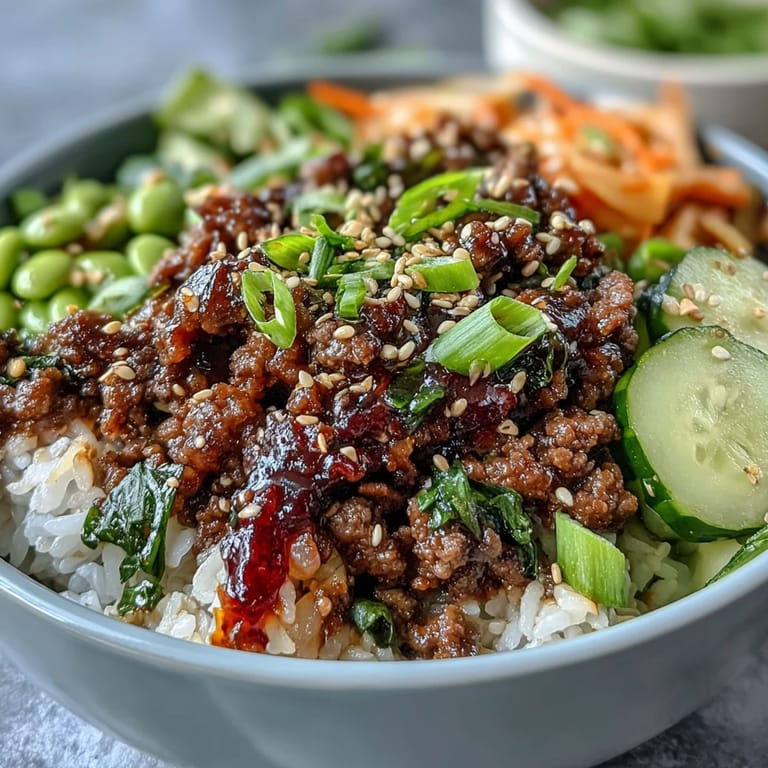
Save My partner and I discovered we both had a rough day when I served this one evening, and something about the combination of warm rice, spicy beef, and cool cucumber seemed to reset everything. We barely talked through dinner, just ate and gradually relaxed, and I realized this bowl has a quiet comfort to it despite being bold and spicy. It became our go-to unspoken remedy for Thursdays.
Why Ground Beef Works Here
Ground beef absorbs flavors faster than chunks because of all that surface area, which is exactly what you need when you're working with gochujang's bold personality. It also cooks quickly and evenly, so there's no worry about hitting different doneness levels like you might with a steak. The texture is also tender enough that it doesn't compete with the vegetables for your attention—everything plays together instead of fighting.
Building Flavor Layers
This bowl works because you're not relying on any single element to carry the whole dish, and that's actually the secret to why Korean food tastes so balanced. The gochujang brings heat and funk, soy sauce adds salt and umami, brown sugar rounds out the rough edges, and fresh toppings keep everything from becoming one-note. Think of assembling the bowl like composing a song—every ingredient is a different instrument, and they only sound good together.
Customization and Storage
The beauty of a rice bowl is that it bends to whatever you have on hand or whatever you're craving that day. Ground turkey or chicken works just as well as beef, and if you're vegetarian, crumbled tofu or plant-based meat absorbs the sauce beautifully. You can prep the beef mixture up to three days ahead and just reheat it gently before assembling, which makes this bowl even more practical for busy weeks when you want homemade food without the cooking stress.
- Swap vegetables based on the season—shredded cabbage in winter, fresh corn in summer, shredded radish if you want extra crunch.
- Cook the rice ahead and store it in the fridge so on a weeknight you literally just warm the beef and assemble.
- Keep gochujang in your pantry always—once you taste how it transforms ground beef, you'll use it constantly.
 Save
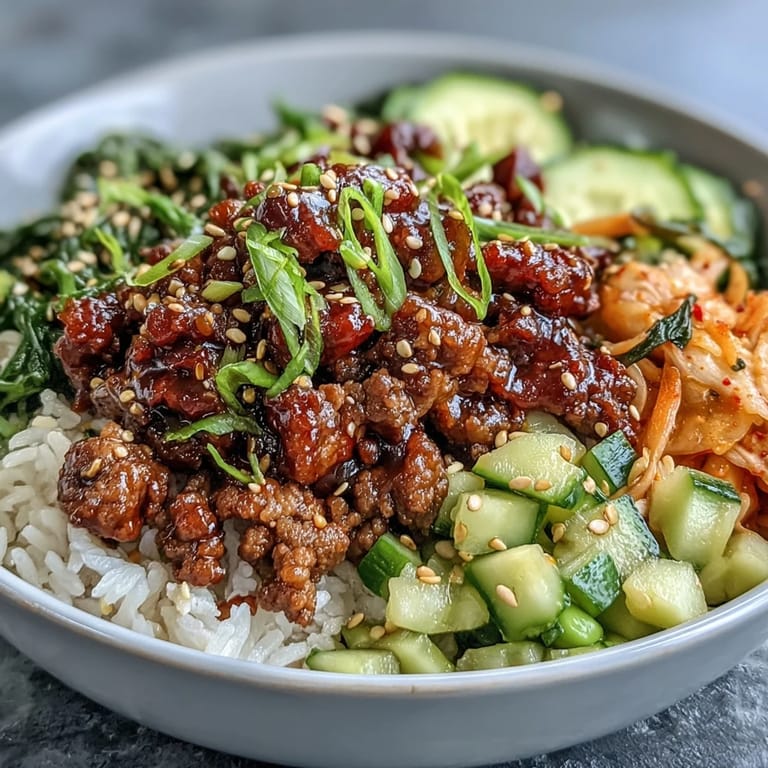
Save This bowl taught me that restaurant-quality food doesn't require fancy techniques or exotic ingredients you can't pronounce. It just requires paying attention to the flavors you're building and respecting each component enough to let it shine. Make it once and it becomes part of your regular rotation, the kind of meal you crave on ordinary days.
Recipe FAQ
- → Can I make this bowl spicy?
Absolutely! Adjust the gochujang amount to your preference—start with 1 tablespoon for mild heat and increase to 3 tablespoons for a fiery kick. You can also add sliced fresh chili peppers or a drizzle of chili oil.
- → What can I substitute for ground beef?
Ground turkey, chicken, or pork work beautifully as lighter alternatives. For a vegetarian version, use plant-based crumbles or firm tofu crumbled and seasoned with the same gochujang mixture. Just adjust cooking time accordingly.
- → Is there a gluten-free option?
Yes! Simply replace the soy sauce with gluten-free tamari or coconut aminos. Most gochujang brands are naturally gluten-free, but always check the label to ensure no wheat-based ingredients were added.
- → Can I prepare components in advance?
The beef mixture stores well in the refrigerator for up to 3 days and reheats beautifully. You can also chop vegetables and cook rice ahead of time. However, assemble bowls just before serving to maintain texture and freshness.
- → What other toppings work well?
Fried eggs with runny yolks add richness, while sliced avocado provides creaminess. Shredded cabbage, radish, or bean sprouts add extra crunch. For more protein, consider adding grilled shrimp or bulgogi-style beef slices.
- → How do I store leftovers?
Store each component separately in airtight containers. The beef keeps for 3-4 days refrigerated, while cooked rice lasts up to 5 days. Reheat beef gently with a splash of water to prevent drying. Avoid freezing as the texture may suffer.