 Save
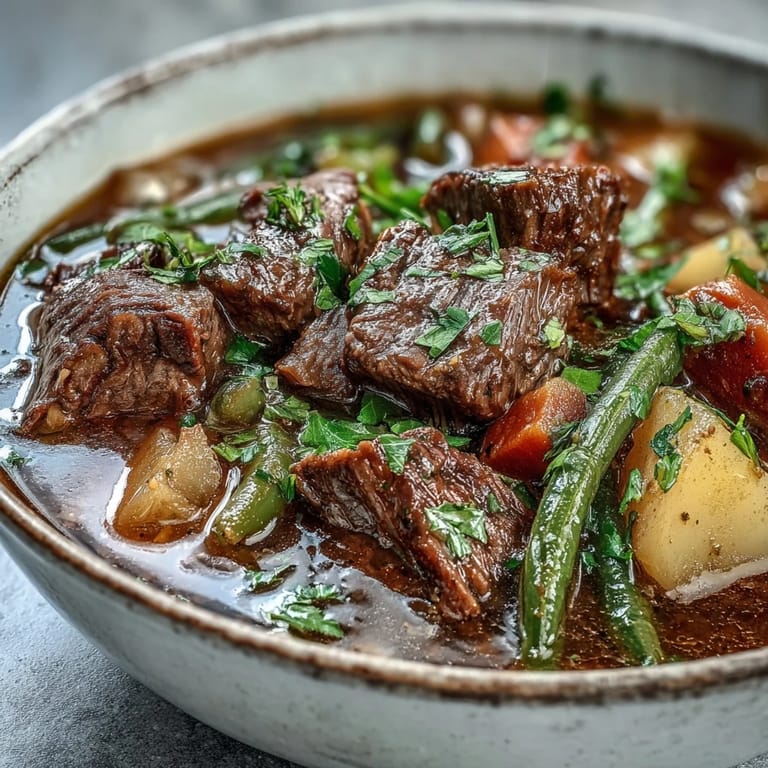
Save My neighbor knocked on my door one February evening with snow piling up outside, clutching a thermos of something steaming. She'd made beef and vegetable soup, and one spoonful transported me back to my grandmother's kitchen where this exact combination simmered for hours. That night, I decided to recreate it my own way, and it became the recipe I turn to whenever the temperature drops or someone needs real comfort food. There's something about the way beef transforms into tenderness that makes everything feel manageable again.
I made this for my family when my dad came home from the hospital, and watching him eat it slowly, without complaint or distraction, told me more than any words could. The kitchen smelled like healing that afternoon—onions caramelizing, herbs releasing their warmth into the broth, the kind of aroma that says someone cares enough to spend time. My son came downstairs asking what smelled so good before it was even ready, which never happens unless it's something truly worth waiting for.
Ingredients
- Beef chuck, cut into 1-inch cubes: This cut has enough marbling to stay flavorful and tender through long cooking, unlike leaner beef which turns stringy. I learned the hard way that cutting it yourself saves money and gives you better control over the size.
- Olive oil: Just enough to create that golden sear on the beef that locks in flavor—you're not deep frying, just creating a foundation.
- Onion, garlic, carrots, and celery: This is your flavor base, the holy trinity plus onion, and they soften into the broth so completely you almost forget they're there.
- Potatoes: They add body to the soup without making it heavy, and they break down slightly to thicken the liquid naturally.
- Parsnip: Optional, but if you add it, you get this subtle sweetness that makes people ask what the secret ingredient is.
- Green beans and peas: These go in at different times because green beans need longer to soften, while peas should stay bright and just barely cooked.
- Diced tomatoes: The acidity cuts through the richness of the beef and helps everything taste fresher and more alive.
- Beef broth: Quality matters here because it's half your soup—I use low-sodium so I can control the salt level myself.
- Bay leaves, thyme, oregano: These herbs are gentle enough that they won't overpower the beef but strong enough that you notice them in every spoonful.
Tired of Takeout? 🥡
Get 10 meals you can make faster than delivery arrives. Seriously.
One email. No spam. Unsubscribe anytime.
Instructions
- Sear the beef until it's golden on all sides:
- Heat your oil until it shimmers and almost smokes—this is the only chance to create flavor on the beef itself. Work in batches if you need to, and don't crowd the pot or the beef will steam instead of sear, which defeats the purpose.
- Build the flavor base with aromatics:
- Once the beef is out, the onion, carrots, and celery hit that hot pan and suddenly your kitchen transforms. You'll hear them sizzle and smell their sweetness deepening, and that's when you know you're doing it right.
- Bring everything together in one pot:
- Return the beef and add all your liquids and seasonings at once—don't be shy about tasting as you go. The soup should smell complex and herbaceous at this point, like something good is about to happen.
- Simmer low and slow until the beef surrenders:
- Cover the pot and let it bubble gently for an hour and a quarter, stirring occasionally so nothing sticks to the bottom. The beef will go from barely tender to so soft you can break it with a wooden spoon.
- Add the peas at the very end:
- They only need ten to fifteen minutes, just enough time to warm through and soften slightly while keeping their bright green color. This is the step that makes the soup feel fresh instead of heavy.
- Taste and adjust before serving:
- Remove those bay leaves first, then take a spoonful and think about what it needs—more salt, more pepper, maybe a splash of Worcestershire if you want it deeper. Trust your palate; you know what tastes right.
 Save
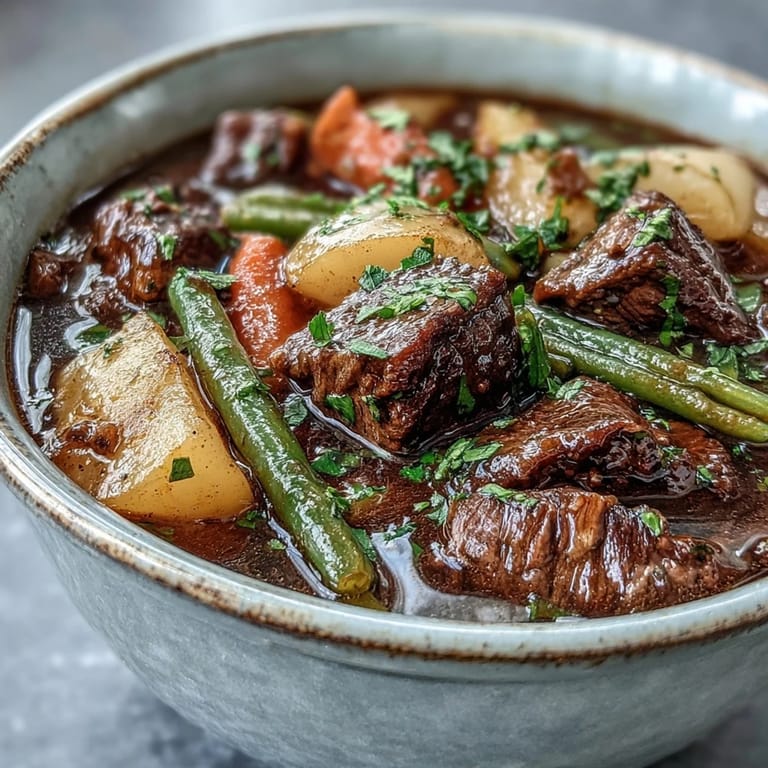
Save This soup became the thing I made when my best friend went through a rough patch, and she told me years later that the meals meant more than any phone call. That's when I realized soup isn't really about feeding someone's stomach—it's about saying I see you, I'm thinking of you, and I'm willing to spend two hours making sure you're okay.
The Magic of the Second Day
Leftovers of this soup taste noticeably better after sitting in the refrigerator overnight, when all the flavors have settled into each other and the broth becomes richer and more concentrated. I've learned to actually look forward to leftover night because there's something about reheating soup that transforms it into something even better than the day you made it. The peas stay tender, the beef becomes even more yielding, and the whole thing tastes like it was always meant to be served on the second day.
Bread Pairing and Presentation
Crusty bread isn't optional—it's essential, the thing that turns soup into a complete meal and gives you something to do with your hands while you're eating. I learned this from my mother, who would tear bread into pieces and float them in her bowl, soaking up broth like little flavor sponges. The fresh parsley garnish isn't just decoration; it adds brightness that cuts through the richness and reminds you that spring exists even in the middle of winter.
Variations and Customizations
This soup is forgiving enough to adapt to whatever vegetables you have on hand or whatever your mood demands on any given day. I've swapped regular potatoes for sweet potatoes when I wanted earthier sweetness, and added turnips when I wanted something peppery and sharp. The core of the recipe—the beef, the broth, the herbs—stays the same, but you can play with the vegetables until it feels like your own creation.
- Try adding a tablespoon of Worcestershire sauce for depth if you want the soup to taste richer and less bright.
- A dash of smoked paprika transforms this into something that tastes like it was cooked over fire.
- Freeze individual portions in containers and you'll have homemade soup ready in twenty minutes on days when cooking feels impossible.
 Save
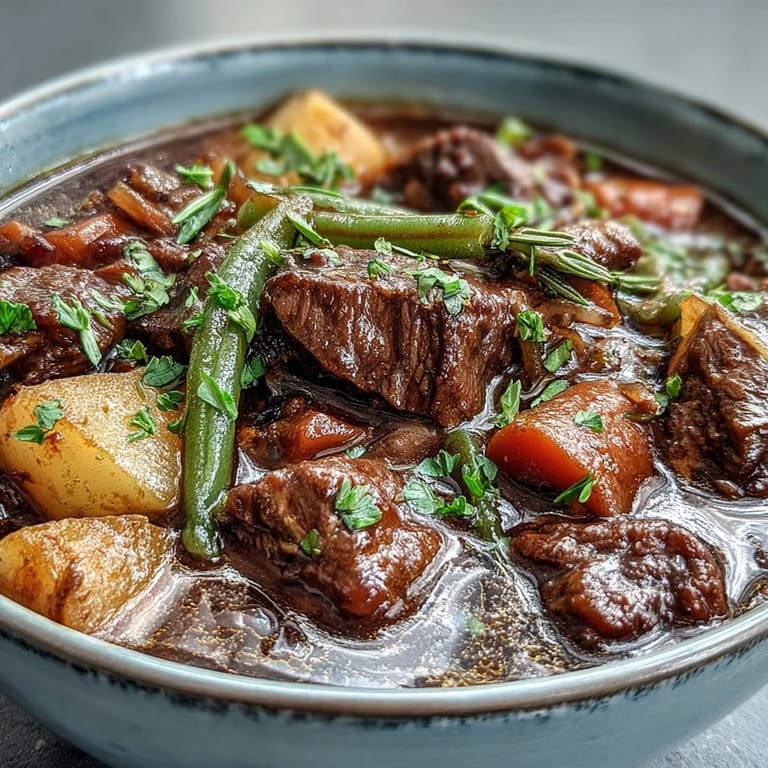
Save Make this soup because you deserve warmth and nourishment and something that tastes like someone cares. Every bowl is an invitation to slow down and notice that good food, made with intention, never goes to waste.
Recipe FAQ
- → What cut of beef works best for this soup?
Beef chuck is ideal because it becomes tender and flavorful when simmered for extended periods. You can also use beef stew meat or bottom round.
- → Can I make this soup in a slow cooker?
Yes, brown the beef and sauté the vegetables first, then transfer everything to a slow cooker. Cook on low for 6-8 hours or high for 4-5 hours.
- → How do I store and reheat leftovers?
Store in an airtight container in the refrigerator for up to 4 days or freeze for up to 3 months. Reheat gently on the stovetop or in the microwave, adding a splash of broth if needed.
- → What vegetables can I substitute or add?
You can add turnips, sweet potatoes, corn, or cabbage. Mushrooms and pearl barley also make excellent additions for extra heartiness and flavor.
- → How can I thicken the soup if it's too watery?
Remove some of the cooked potatoes, mash them, and stir back into the soup. Alternatively, mix 2 tablespoons of cornstarch with cold water and add during the last 10 minutes of cooking.
- → Can I use chicken or vegetable broth instead?
Yes, though beef broth provides the richest flavor. If using chicken or vegetable broth, consider adding a tablespoon of tomato paste or soy sauce for extra depth.