 Save
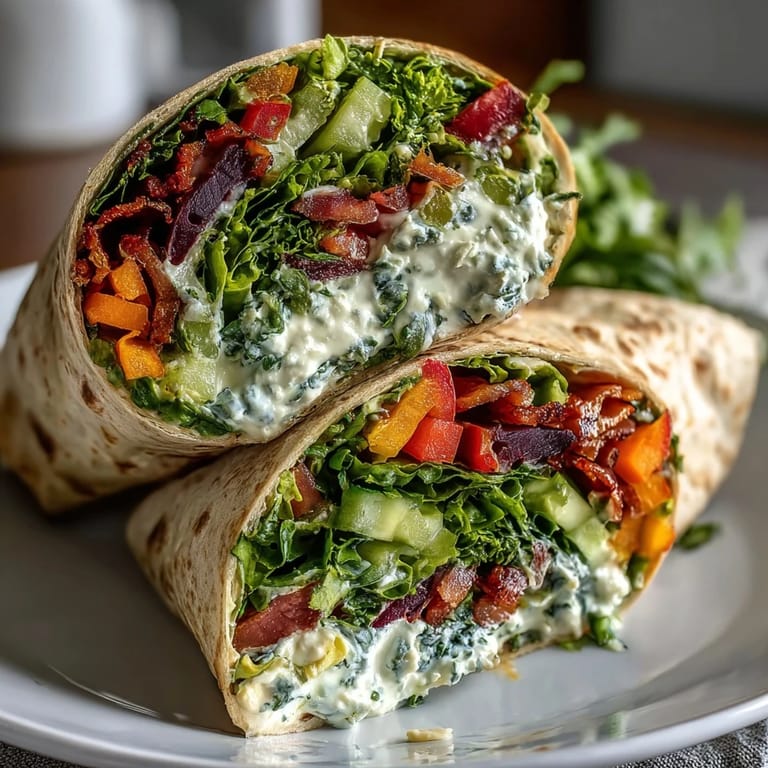
Save Last spring, my daughter came home from school asking if I could pack her something that looked as fun as it tasted, and that's when these rainbow wraps became our go-to lunch obsession. There's something magical about layering vegetables in neat rows—it turns an ordinary Tuesday lunch into a little edible art project. My son started requesting them for field trips, and suddenly I was making four at a time, watching him brag to his friends about the purple cabbage stripes. It became less about feeding them and more about creating something they'd actually eat without complaint.
I'll never forget packing these for my son's first field trip, watching him nervously unwrap his wrap at a picnic table surrounded by other kids' soggy sandwiches. He sat there like he'd discovered something revolutionary, methodically eating each diagonal half while showing off the rainbow layers to anyone nearby. By the end of that day, three other parents had texted asking for the recipe, and I realized these wraps had become something of a classroom legend.
Ingredients
- 4 large whole wheat tortillas: These are your canvas—choose ones that are pliable enough to roll without cracking, and if you find a brand you love, stick with it because consistency matters here.
- 4 tbsp hummus (classic or flavored): The glue that holds everything together and adds protein; roasted red pepper or garlic hummus adds unexpected depth if you want to experiment.
- 1 medium red bell pepper, thinly sliced: Sweet, crisp, and bright enough that kids immediately recognize this as a vegetable worth eating.
- 1 medium yellow bell pepper, thinly sliced: This yellow stripe is where the visual magic happens, and it pairs beautifully with the red for that genuine rainbow effect.
- 1 medium carrot, peeled and julienned: The trick is cutting them thin enough to stay tender; use a vegetable peeler or mandoline if you have one, your fingers will thank you.
- 1 small cucumber, julienned: This keeps everything crisp and adds a refreshing note that prevents the wrap from tasting too heavy.
- 1 cup purple cabbage, shredded: Don't skip this—it's the ingredient that holds the wrap together structurally and provides that satisfying crunch that makes people keep eating.
- 1 cup baby spinach leaves: Mild and tender, these wilt slightly when wrapped but add iron and nutrition without any assertive taste.
- 1/4 cup fresh parsley or cilantro, chopped (optional): The optional herbs are where you can add personality; cilantro lovers know exactly what they're after, while parsley is the safe choice for hesitant eaters.
- 1 avocado, sliced: Creamy and luxurious, this transforms the wrap from simple to special, though it's truly optional if your budget or preferences lean that way.
- 4 tbsp crumbled feta cheese: A salty finish that makes each bite more interesting, though you can skip it entirely for a dairy-free version.
Tired of Takeout? 🥡
Get 10 meals you can make faster than delivery arrives. Seriously.
One email. No spam. Unsubscribe anytime.
Instructions
- Prepare your workspace and tortilla:
- Lay your tortilla flat on a clean cutting board or plate, and spread the hummus in one thin, even layer all the way across, leaving about half an inch from the edges bare so everything doesn't squeeze out when you roll. This is the moment where you're setting yourself up for success or frustration, so take your time here.
- Build your rainbow in horizontal rows:
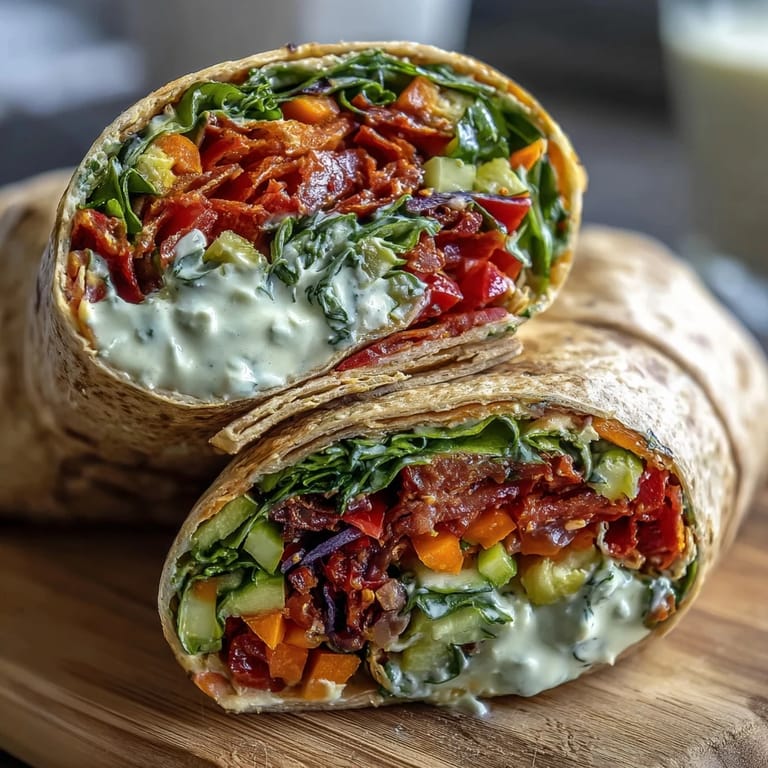
- Starting near the center and working outward, lay down your vegetables in distinct lines—red pepper, yellow pepper, carrot, cucumber, purple cabbage, then spinach, arranging them like an actual rainbow arching across the wrap. The more organized you are now, the more beautiful the wrap looks when you slice it open later, and honestly, that visual payoff is half the fun.
- Add your finishing touches:
- Scatter your herbs across the middle, add avocado slices if you're using them, and sprinkle feta cheese evenly so every bite has a little bit of everything. This is where you trust your instincts—if it feels generous and full, you've got it right.
- Roll with purpose and confidence:
- Fold both long sides of the tortilla inward about an inch, then grab the bottom edge and roll tightly upward, pressing gently as you go so the wrap stays compact and nothing escapes. You want it snug but not strangled; think firm hug rather than vice grip.
- Wrap and transport:
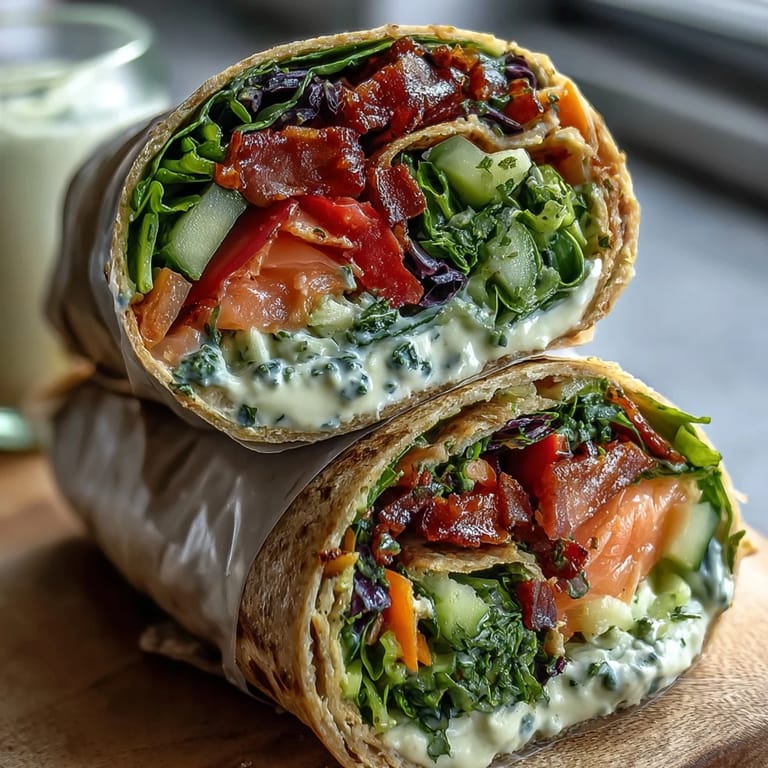
- Let the wrap sit seam-side down for a minute so it holds its shape, then wrap it in parchment paper or foil for traveling, which also keeps your hands clean and makes it easier to eat on the go. The diagonal slice is the final touch that makes it look professional and intentional.
 Save
Save What started as a nutrition hack became a family ritual, and now there's something almost ceremonial about laying out all those vegetables in neat little piles before assembling. My daughter, who was once impossible about eating vegetables, now critiques my hummus spreading technique and insists on arranging the rows herself because she says the presentation matters. That's when I knew these wraps were about more than lunch—they were about giving my kids a chance to own their food and maybe, just maybe, feel a little proud about eating their vegetables.
The Secret to Perfect Wrap Texture
The texture of a wrap depends entirely on how wet or dry your vegetables are before assembly. I learned this the hard way when a hastily rinsed batch of spinach made everything soggy by lunchtime, and I've since discovered that patting everything dry with a clean kitchen towel makes an enormous difference in how your wrap holds up through the morning. Temperature also matters—room temperature vegetables roll easier than cold ones, so pull your ingredients out of the fridge a few minutes before assembly if you have the time.
Customization Without Losing the Magic
These wraps are genuinely forgiving, and you can swap nearly every vegetable based on what's in your produce drawer or what you're in the mood for. I've made versions with thinly sliced broccoli, roasted zucchini, fresh tomatoes, or shredded beets, and each one feels like a brand new lunch despite the formula remaining exactly the same. The only non-negotiables are having something crunchy, something creamy, and something colorful, which keeps the concept intact even when the details shift.
Making These Ahead for Busy Weeks
Sunday prep has become my secret weapon, and I've found that assembling these the night before actually helps them hold together better because everything compresses slightly and bonds together in the refrigerator. I layer parchment between each wrap so they don't stick to each other, and they keep beautifully for up to two days as long as you're not adding avocado, which browns quickly. If you're planning ahead, prepare all your vegetables the day before but wait until the morning to actually assemble, which takes all of fifteen minutes but makes fresh lunches feel spontaneous rather than like last-minute scrambling.
- Prep vegetables the night before and store them in airtight containers to save yourself fifteen hectic minutes in the morning.
- Assemble wraps fresh the day you're eating them if avocado is involved, since it browns within hours.
- Pack any extra hummus or spreads on the side if your wrap might spend more than a few hours waiting to be eaten.
 Save
Save These wraps have become the lunch my kids actually look forward to, and somewhere along the way, they stopped being just a healthy option and became something my whole family gravitates toward when we're packing for adventures. There's something deeply satisfying about rolling up something this colorful and knowing that nobody's going to complain about what's inside.
Recipe FAQ
- → What vegetables work best for these wraps?
Crisp, colorful vegetables like bell peppers, carrots, cucumber, cabbage, and spinach provide freshness and crunch.
- → Can I substitute the hummus spread?
Yes, cream cheese or dairy-free spreads make excellent alternatives to hummus for a different flavor profile.
- → How can I add protein to these wraps?
Incorporate grilled chicken, tofu, or additional cheese like feta to boost protein content.
- → Are these wraps suitable for nut-free diets?
Yes, using nut-free spreads like classic hummus ensures these wraps remain safe for those avoiding nuts.
- → What is the best way to keep the wraps fresh for lunch?
Wrap tightly in parchment paper or foil and store in a cool place to maintain freshness until mealtime.