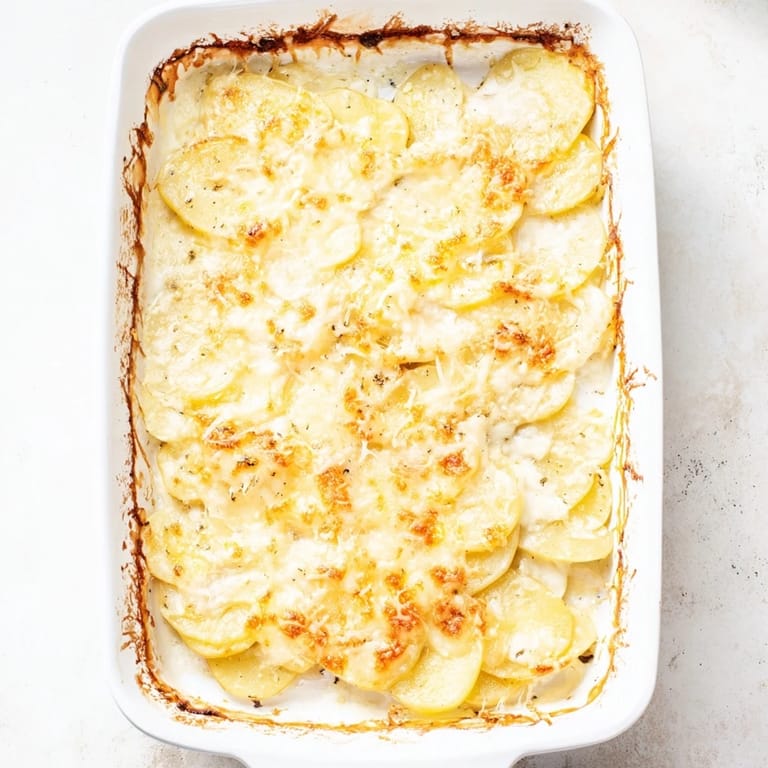
 Save
Save The smell of bubbling cheese and cream fills my tiny apartment kitchen, taking me back to my first apartment where I made this on a Tuesday night just because I needed something warm after a terrible day at work. My roommate wandered in, drawn by the aroma like a cartoon character floating toward a pie on a windowsill, and we ended up eating half the dish straight from the baking dish with wooden spoons.
I brought this to a potluck last winter and watched three different people ask for the recipe while still chewing their first bite. My friend Sarah, who swears she hates cooked cheese, went back for thirds and then texted me at eleven that night asking if I had any extra she could pick up.
Ingredients
- 1.5 kg Yukon Gold potatoes: These hold their shape better than Russets and have a naturally buttery flavor that makes the dish extra luxurious
- 2 cloves garlic: Freshly minced garlic dissolves into the cream creating subtle aromatic pockets throughout the layers
- 60 g unsalted butter: Use this to generously grease your baking dish so nothing sticks and you get those golden edges
- 500 ml heavy cream: The richness here is non negotiable and what transforms this from scalloped potatoes into something spectacular
- 240 g grated Gruyère cheese: This melts into incredible gooey strands and adds that nutty depth that makes the dish unforgettable
- 60 g grated Parmesan cheese: Adds a salty sharpness that cuts through all the cream and prevents the dish from feeling too heavy
- 1 tsp salt: Potatoes need plenty of seasoning so do not be shy here
- ½ tsp freshly ground black pepper: Freshly ground makes a huge difference in brightness and complexity
- ¼ tsp freshly grated nutmeg: The secret ingredient that makes the cream taste professionally crafted
Tired of Takeout? 🥡
Get 10 meals you can make faster than delivery arrives. Seriously.
One email. No spam. Unsubscribe anytime.
Instructions
- Get your oven ready:
- Preheat to 190°C and generously butter a 23x33 cm baking dish, paying special attention to the corners
- Make the creamy base:
- Melt butter in a saucepan over medium heat, add garlic and cook for just one minute until it smells amazing, then stir in cream, salt, pepper, and nutmeg
- Build the first layer:
- Arrange half your potato slices in overlapping rows like shingles on a roof, pour half the cream mixture over them, and scatter with half of both cheeses
- Repeat and finish:
- Layer the remaining potatoes, pour over the rest of the cream, and top with the remaining cheeses
- Bake covered first:
- Cover tightly with foil and bake for 40 minutes so the potatoes steam and cook through in the cream
- Get the golden top:
- Remove foil and bake another 20 minutes until the top is bubbling and deeply golden in spots
- The hardest part:
- Let it rest for 10 minutes before serving so the sauce thickens slightly and does not run everywhere when you cut it
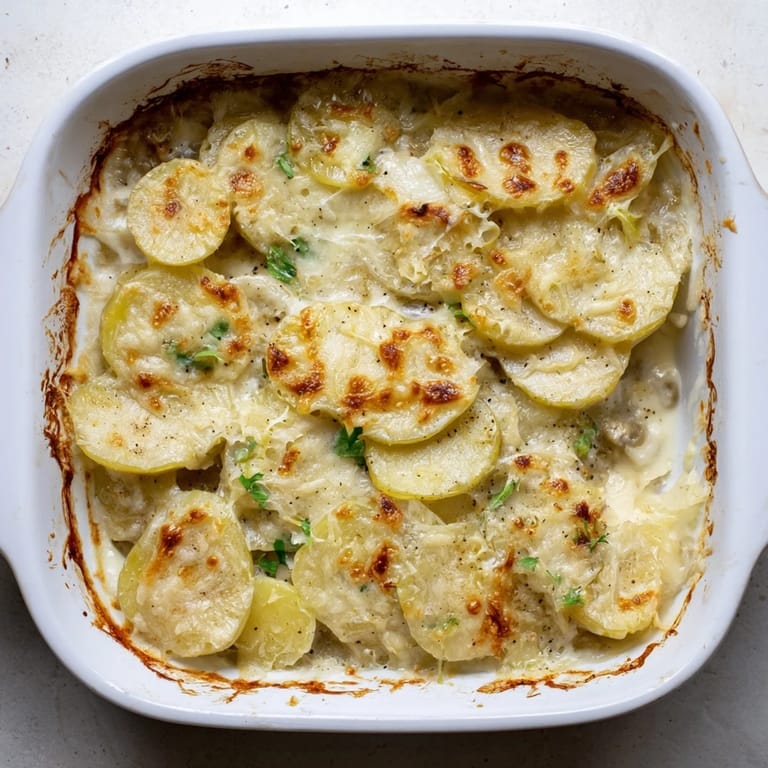 Save
Save My grandmother used to make something similar but she never wrote down her recipe. Years later I found out she always added a splash of white wine to her cream, which I have started doing when I want to feel fancy, though the dish is perfect without it too.
Choosing Your Potatoes
Yukon Golds are my go to because they have enough starch to thicken the cream slightly but still hold their shape beautifully. Russets work too but they can get a bit mealy, and waxy potatoes like red potatoes will not absorb that creamy sauce the way you want them to.
Make It Ahead
You can assemble this entire dish up to 24 hours in advance, cover it tightly, and keep it in the refrigerator. Just add 10 extra minutes to the covered baking time since it will be cold going into the oven.
Serving Suggestions
This pairs beautifully with roasted chicken, pork tenderloin, or a green salad with a sharp vinaigrette to cut through all that richness. Honestly, I have also eaten it as a main course with nothing but a glass of white wine and called it dinner.
- A simple arugula salad with lemon dressing balances everything perfectly
- Fresh thyme or rosemary between layers adds wonderful herbal notes
- Leftovers reheat surprisingly well in a 350°F oven covered with foil
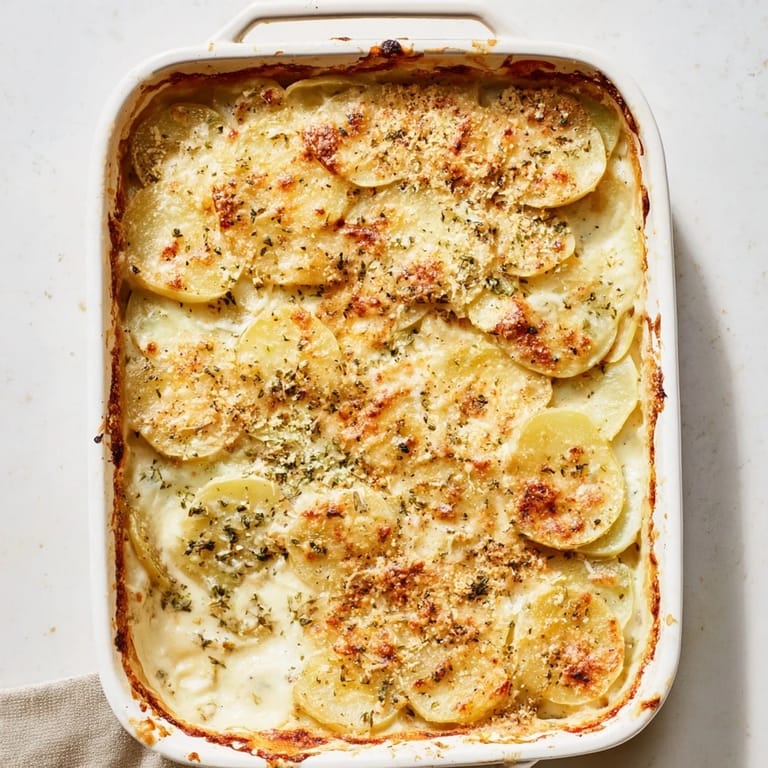 Save
Save There is something deeply satisfying about serving a dish that makes people close their eyes and make involuntary happy noises. That is the magic of potatoes and cream doing what they do best.
Recipe FAQ
- → What type of potatoes work best for au gratin?
Yukon Gold potatoes are ideal because they hold their shape well during baking and have a naturally creamy texture. Russet potatoes also work beautifully, becoming especially tender and absorbing the creamy sauce deeply.
- → Can I prepare au gratin potatoes ahead of time?
Yes, assemble the dish completely, cover tightly, and refrigerate for up to 24 hours before baking. You may need to add 10-15 minutes to the covered baking time if baking from cold.
- → What cheese substitutes can I use?
Sharp cheddar provides excellent flavor and melts well. Emmental offers a mild, nutty taste similar to Gruyère. Comté or aged Gouda also work beautifully for a sophisticated twist on the classic French version.
- → Why do my potatoes turn gray or brown?
Oxidation occurs when potatoes are exposed to air. Slice them just before assembling, or keep sliced potatoes submerged in cold water until you're ready to layer them. Pat them dry before layering to prevent watery results.
- → How do I know when au gratin potatoes are done?
Insert a paring knife or fork into the center—it should slide through the potatoes easily with no resistance. The top should be deeply golden brown, and the cream should be bubbling thickly around the edges.
- → Can I make au gratin potatoes without heavy cream?
Half-and-half creates a lighter version, though the sauce won't be quite as rich. Whole milk with an extra tablespoon of butter can work, but reduce the baking liquid by about one-quarter to prevent excess moisture.